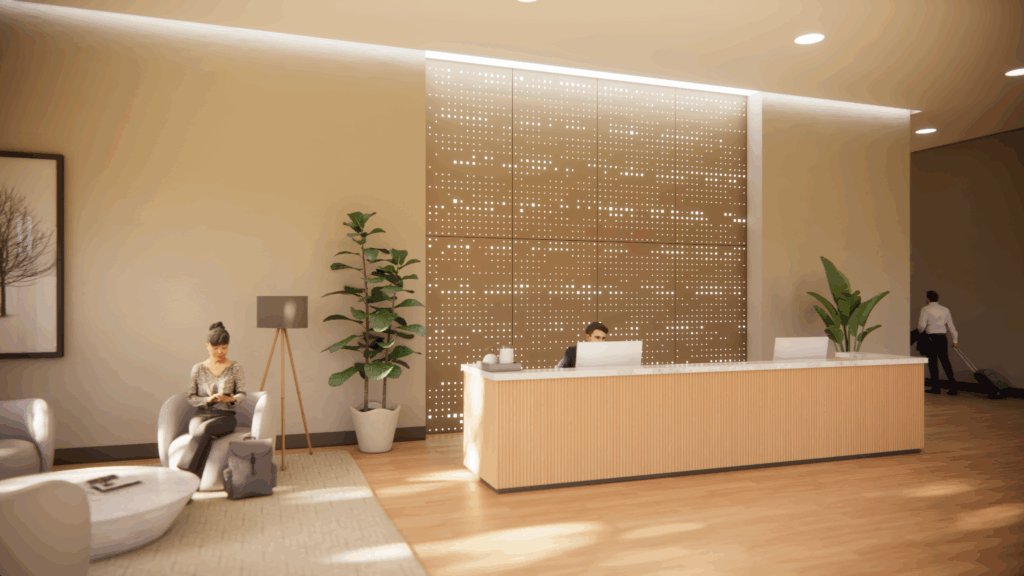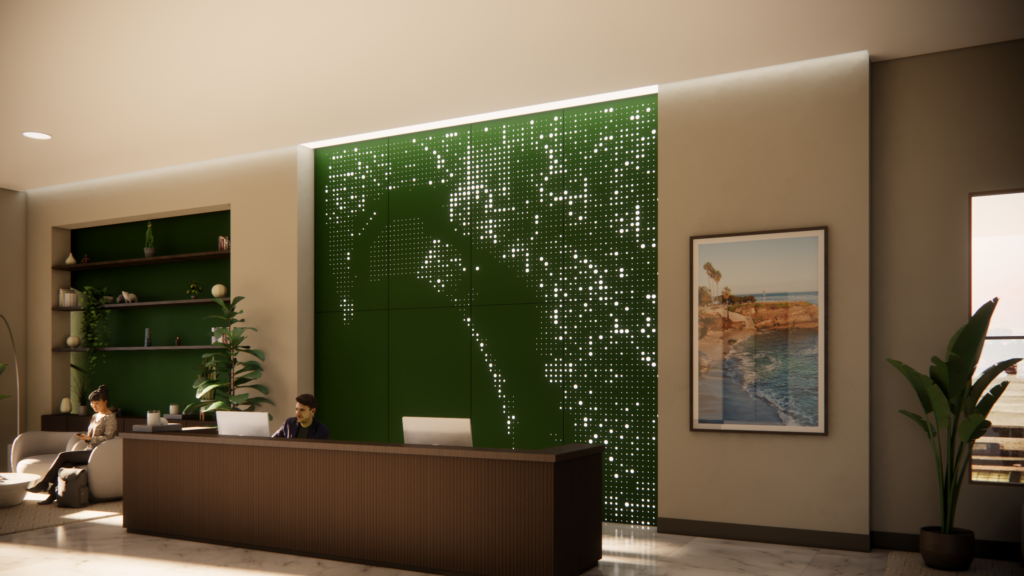
We don't have 'standard' patterns...
Why should we limit ourselves?!
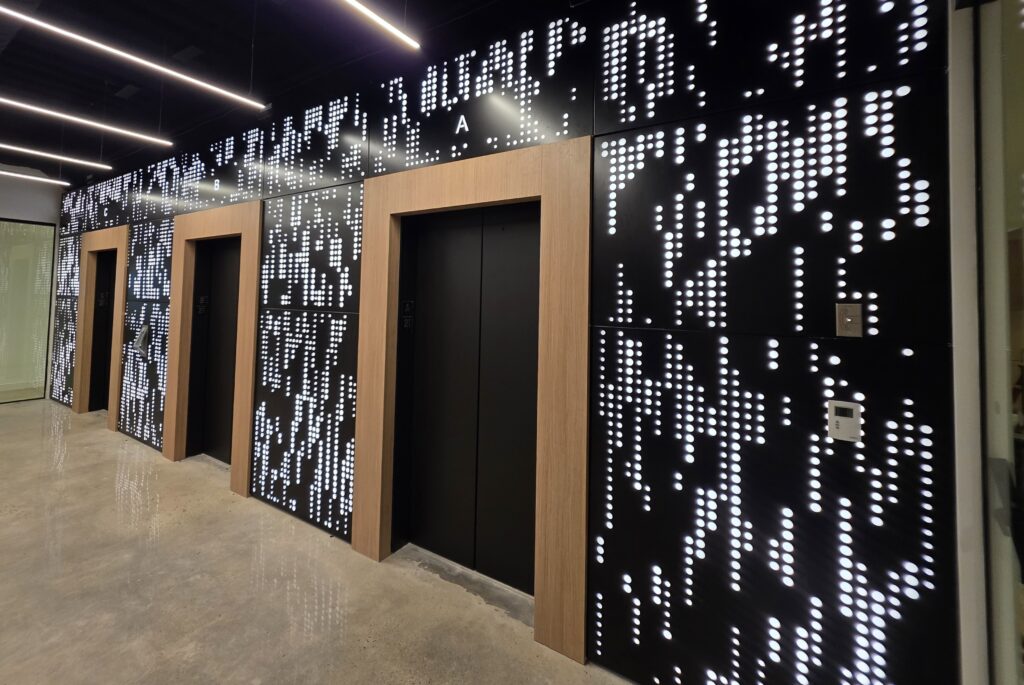
Perforate systems are designed to take customer inputs - space size, pattern ispiration, color, etc. - and output a fabrication-ready design, We can control for many variables to optimize a design, including:
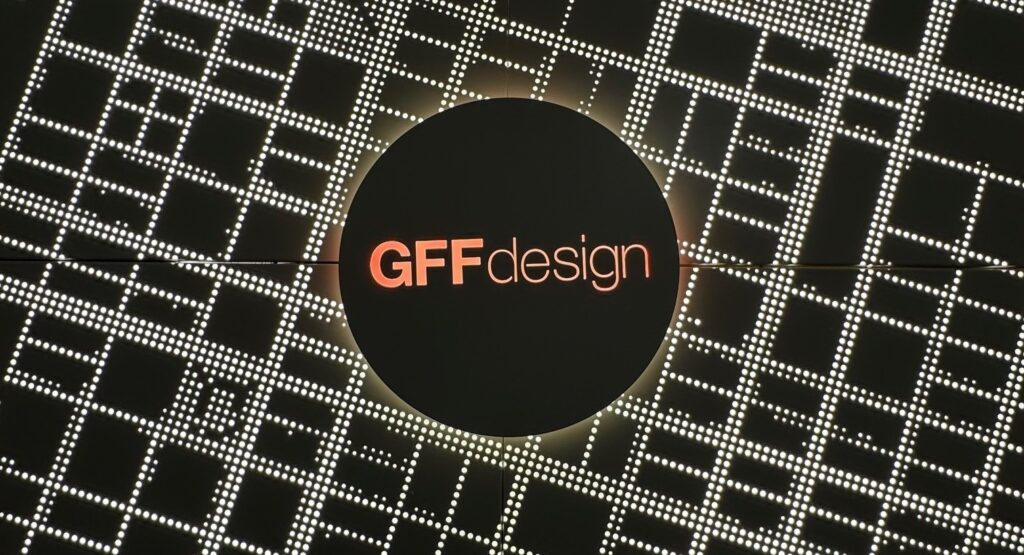
Hole size, shape, and density
Panel size and layout
Gradient behavior (dense → open)
Image, map, or geometry source
Open area targets
PERFORATE PATTERNS
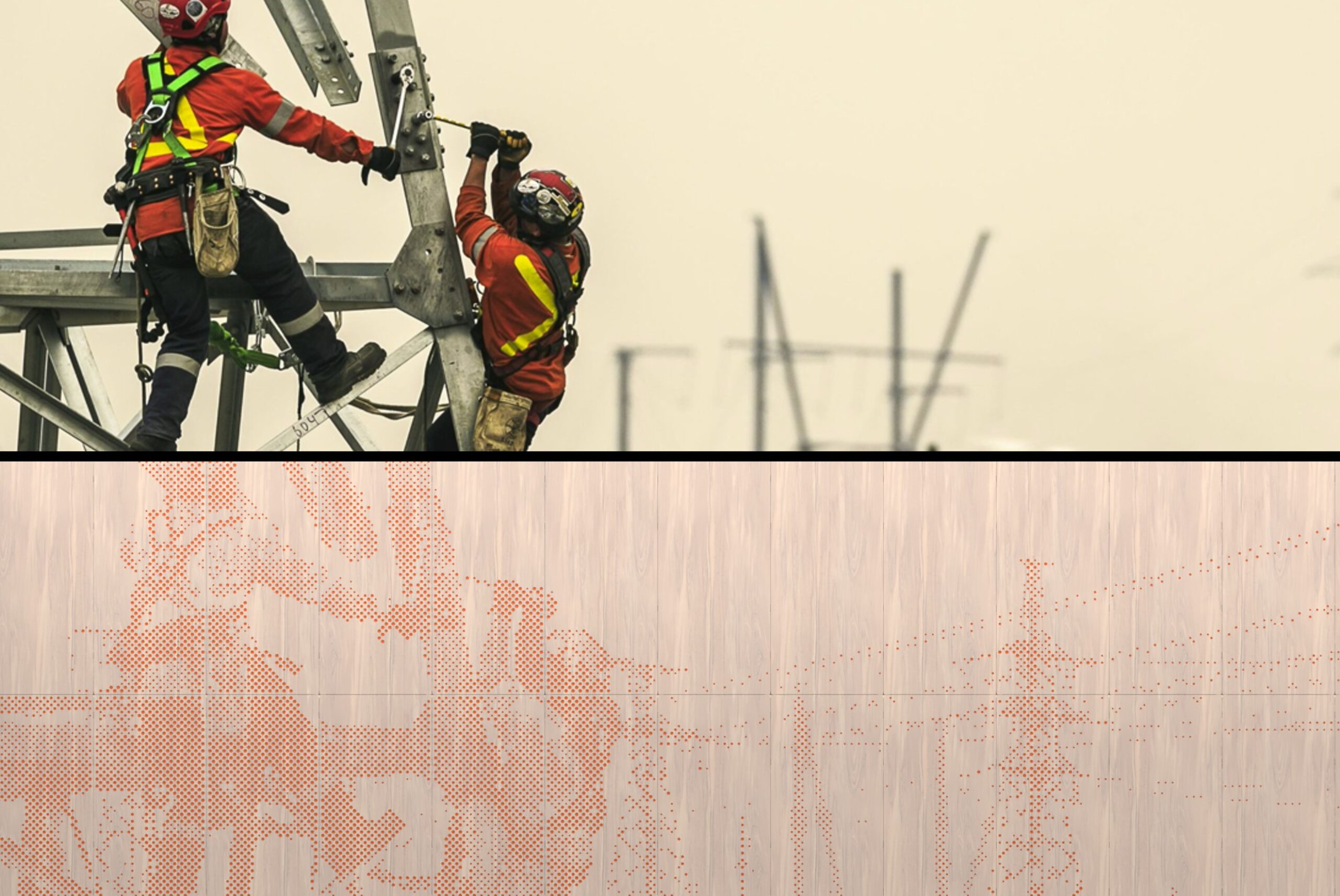
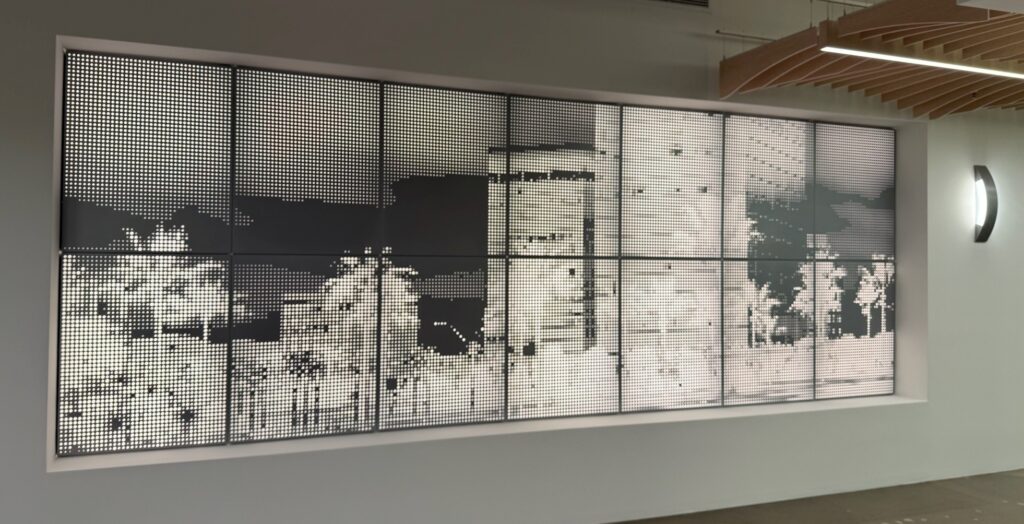
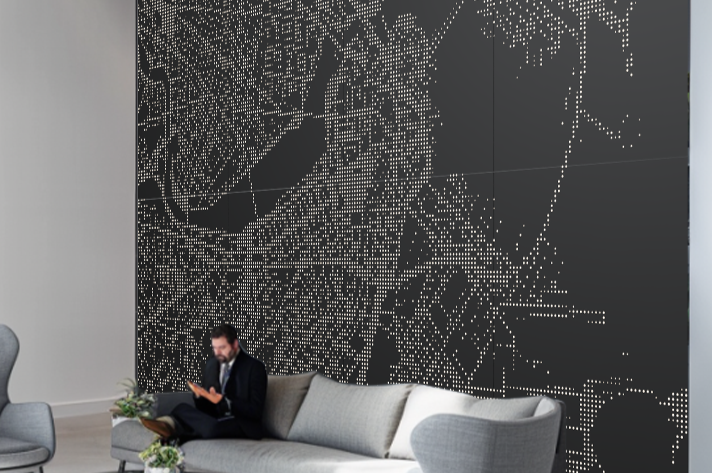
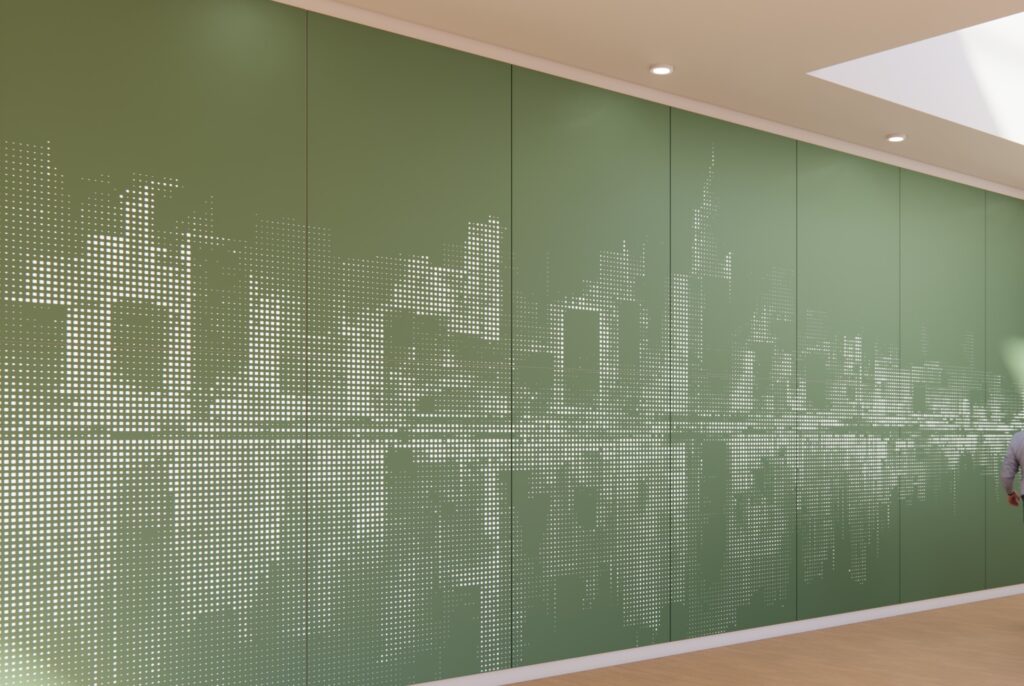
IMAGE MAPPING
Image mapping with Perforate transforms photographs, graphics, and artwork into precisely engineered perforation patterns, translating contrast into controlled perf sizes, shapes, and densities.
Using computational tools and Andalusia's design team, images are optimized to balance clarity, open area, structural integrity, and fabrication efficiency.
The result is a durable, scalable surface where imagery emerges through light, shadow, and depth.
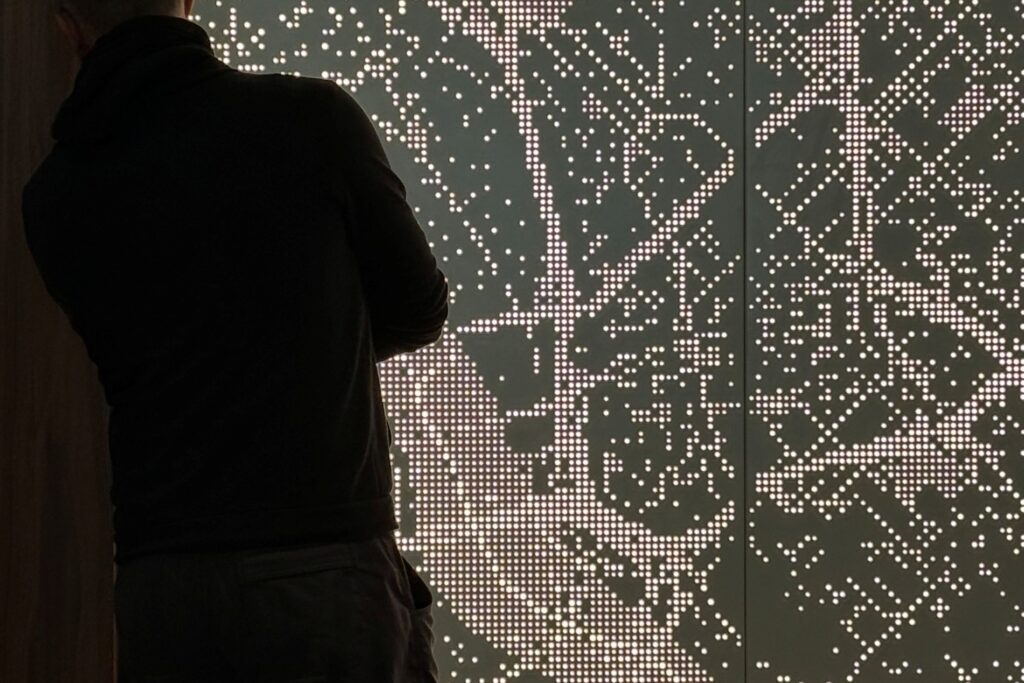
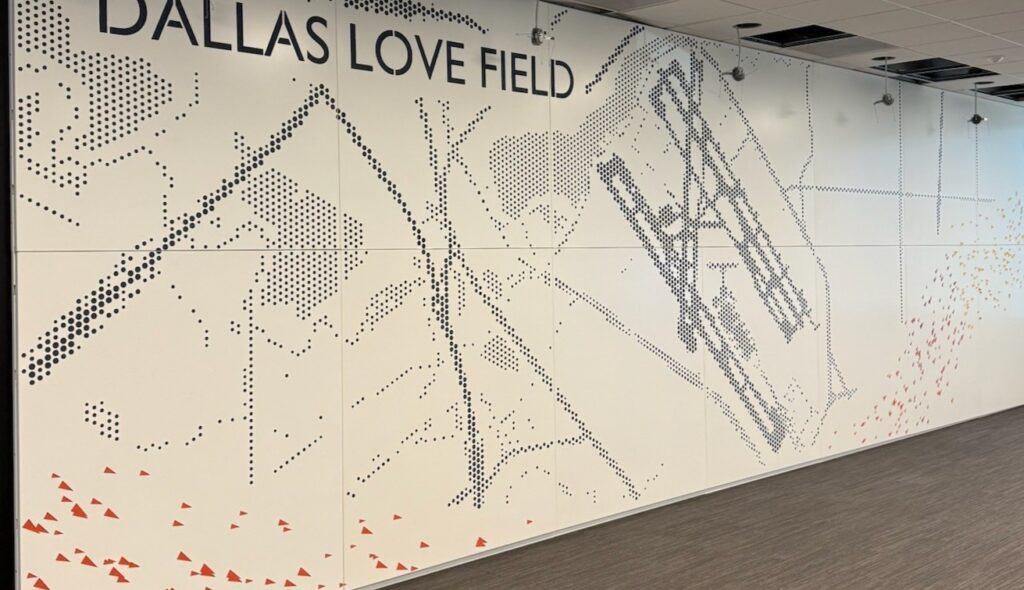
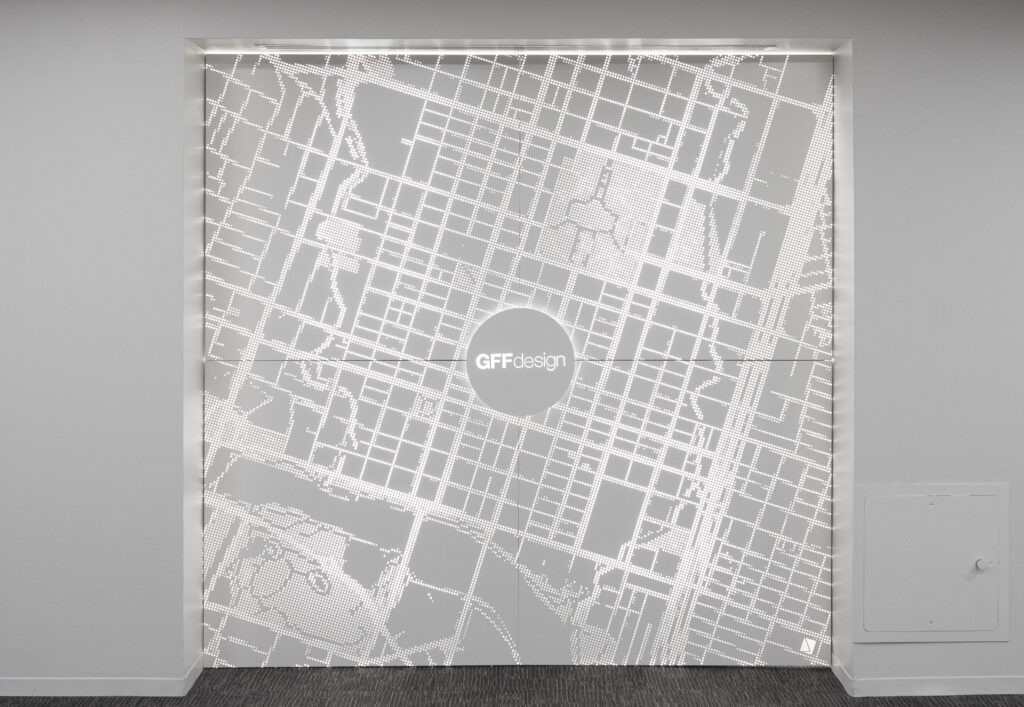
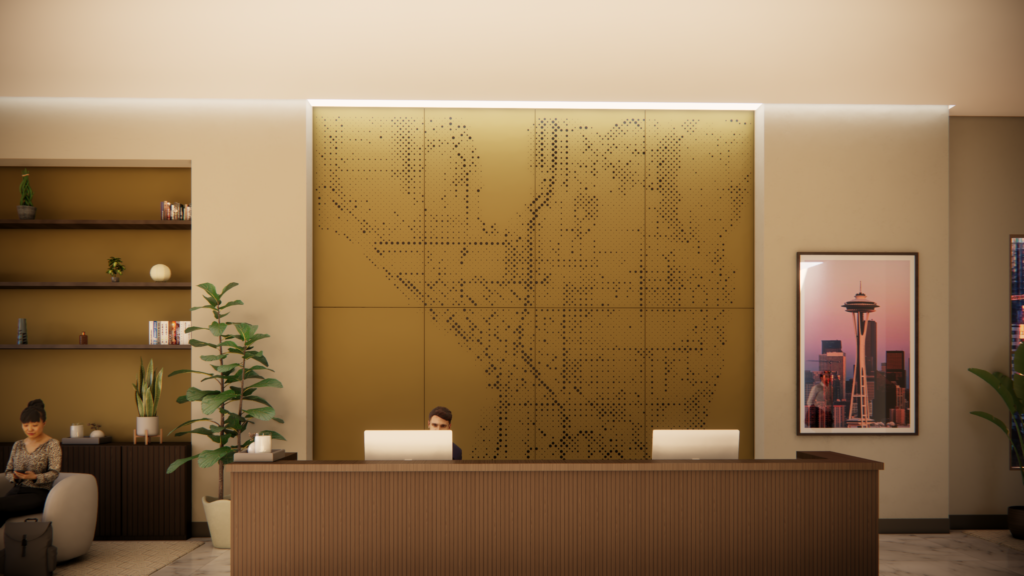
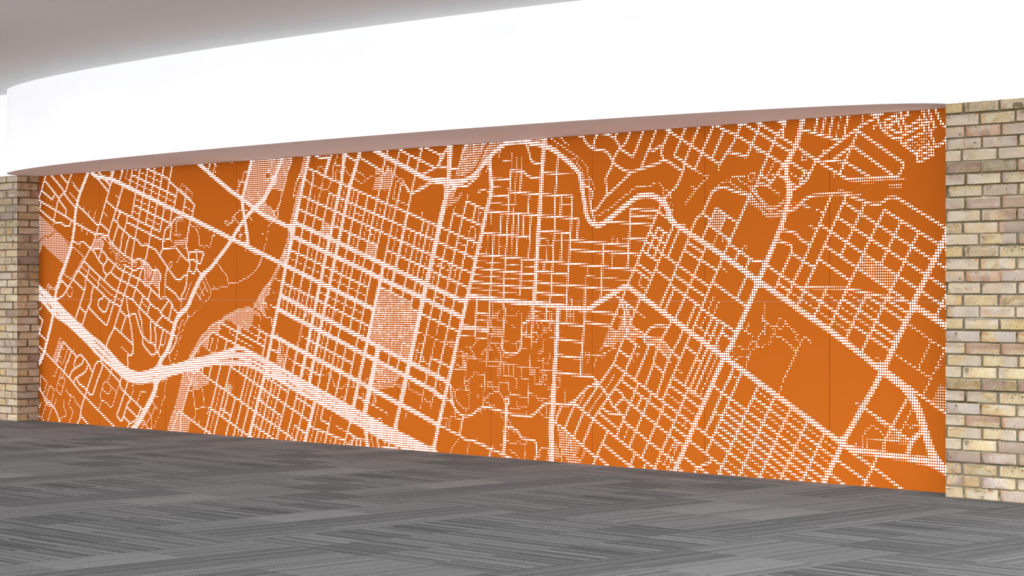
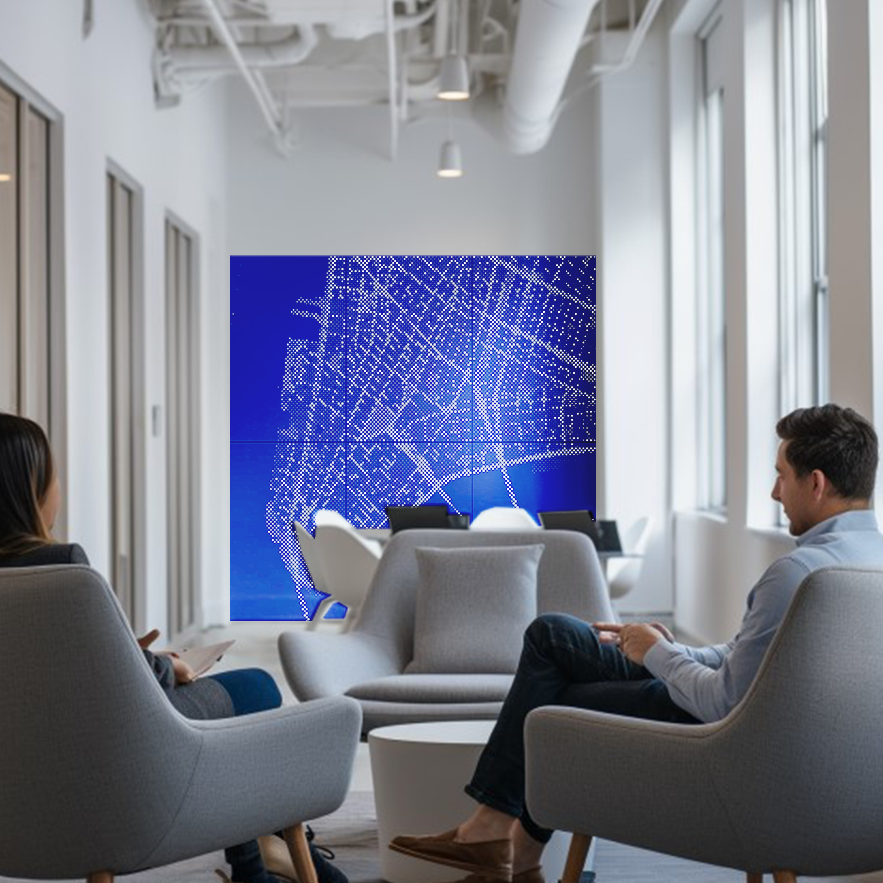
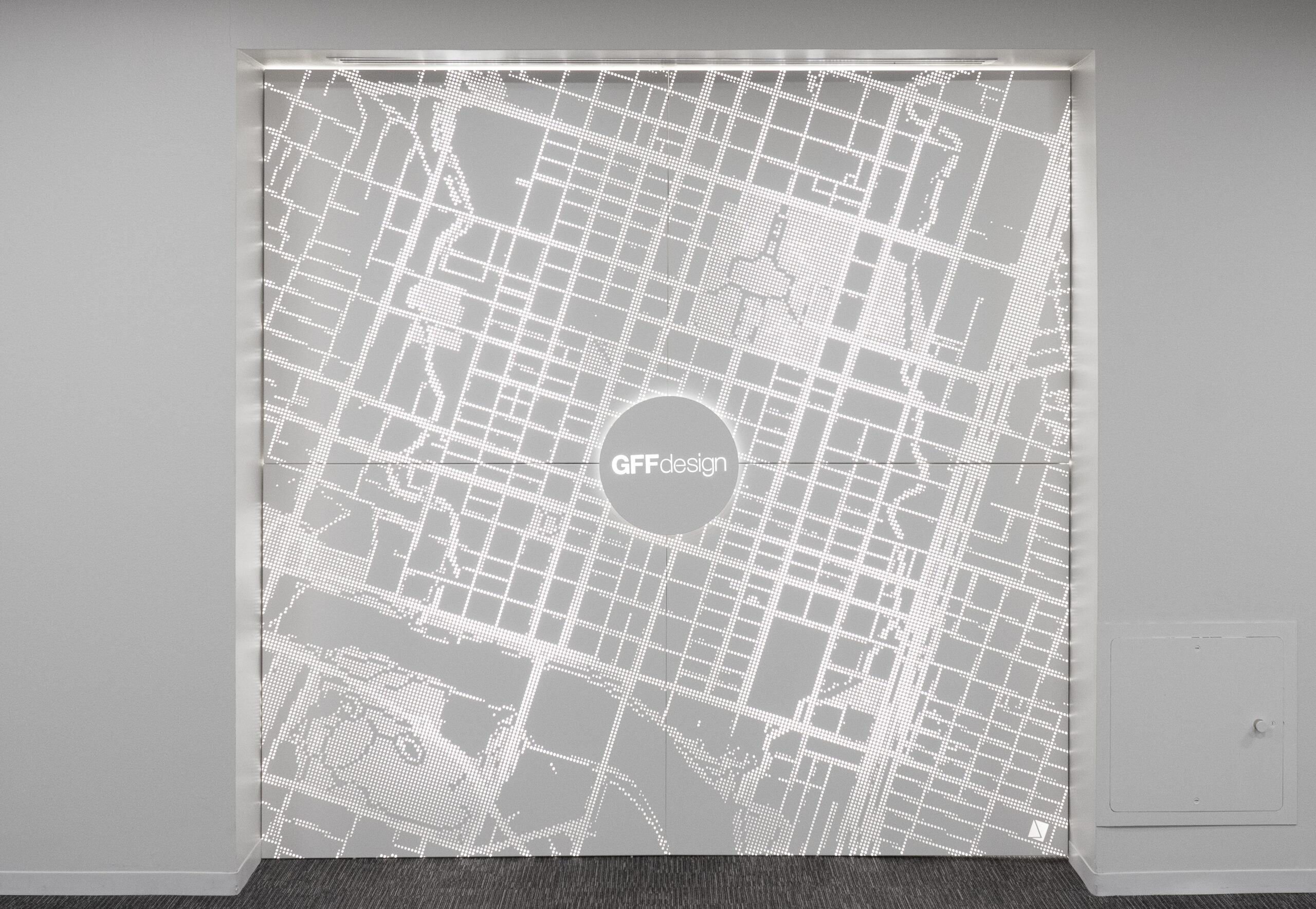
MAPS & STREET GRIDS
Maps and Street Grids translate geographic data into clean perforation patterns.
Streets, blocks, and pathways are abstracted and optimized into linework and fields that balance legibility with structural performance, allowing the pattern to read both as a graphic composition up close and a recognizable map from a distance.
Scales, line weights, and detail can be tuned to emphasize key routes, landmarks, or boundaries.
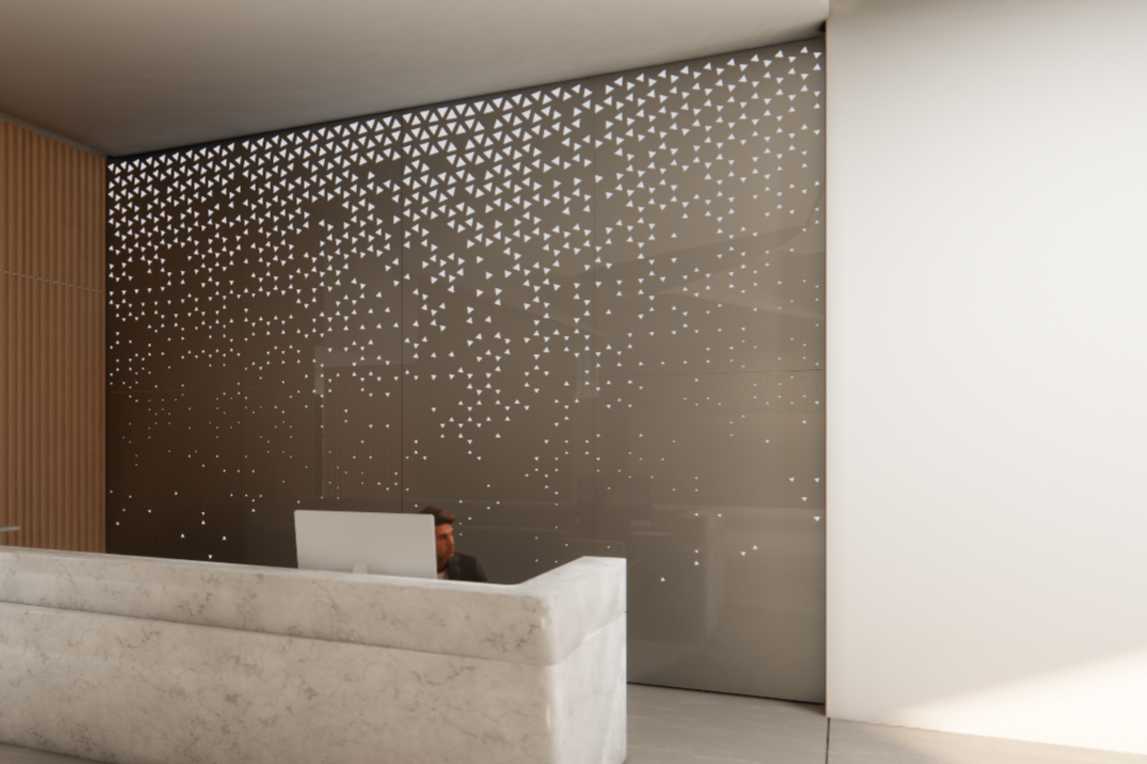
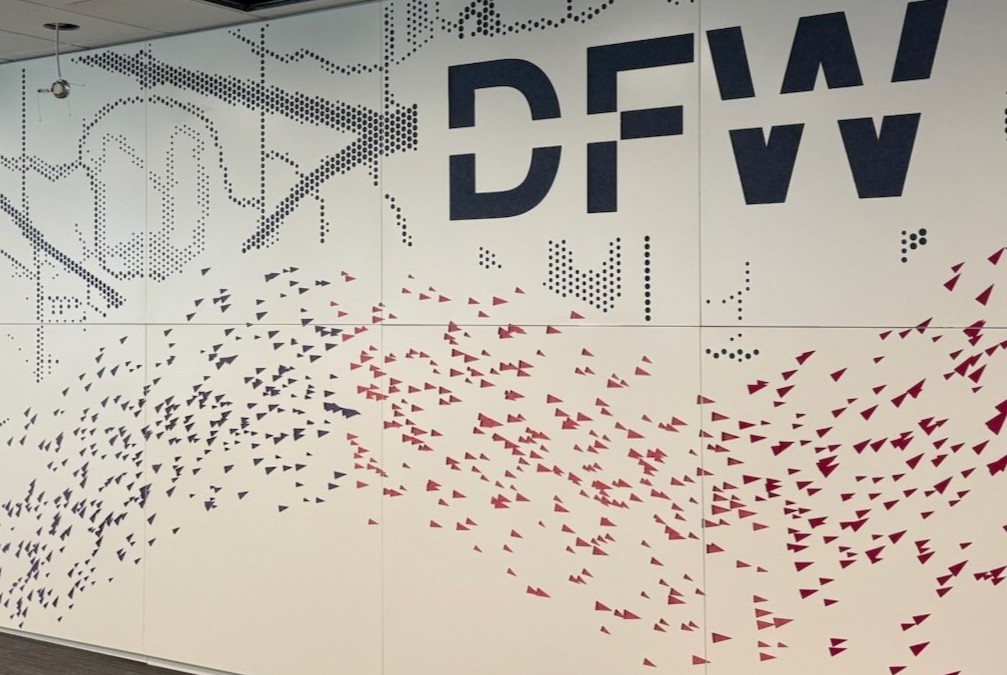
responsive triangles
Responsive Triangles leverage computational geometry to generate patterns driven by attractor points, curves, and fields.
Individual triangles rotate and scale across the surface, creating areas of density, openness, and movement.
The pattern responds fluidly to architectural conditions - expanding around focal points, tightening at edges, or flowing across transitions.
GEOMETRICS
Computational Geometrics applies mathematical and algorithmic rules to generate patterns that are difficult - if not impossible - to design manually.
These patterns can be non-repeating or aperiodic, incorporating systems like Penrose tiling, fractal and recursive geometries that evolve across a surface.
The result is a layered composition where geometry shifts gradually rather than repeating, creating depth, variation, and visual intrigue.
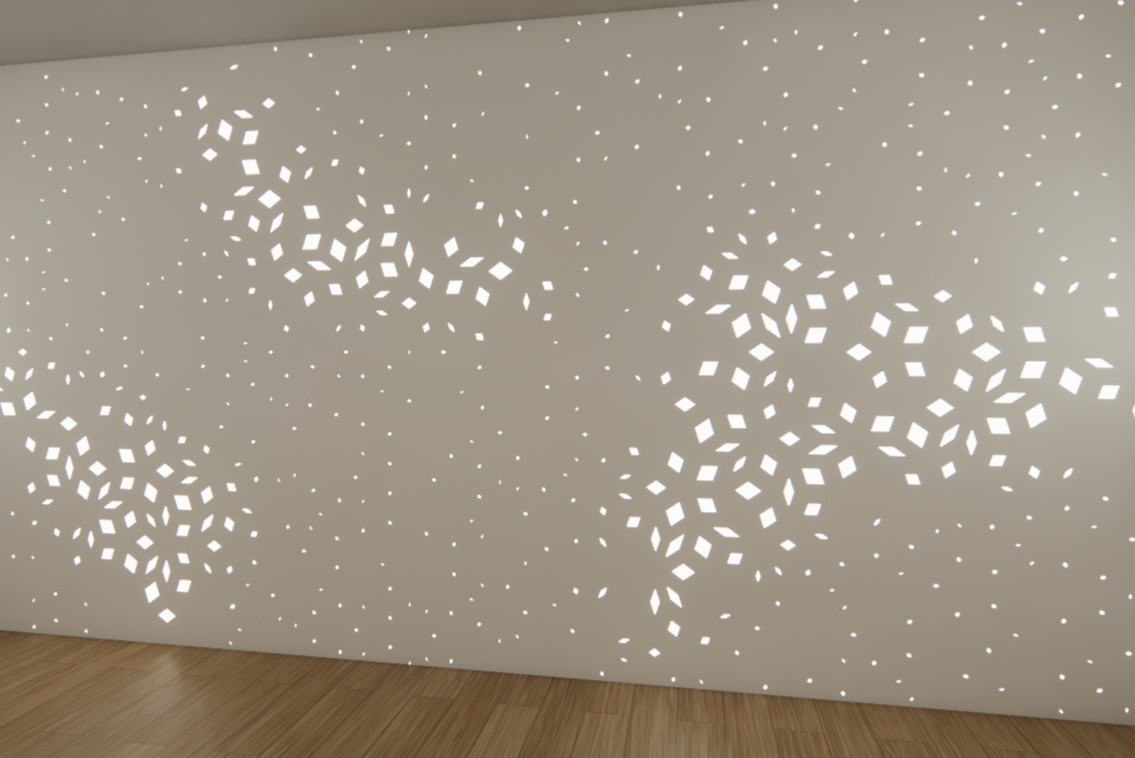
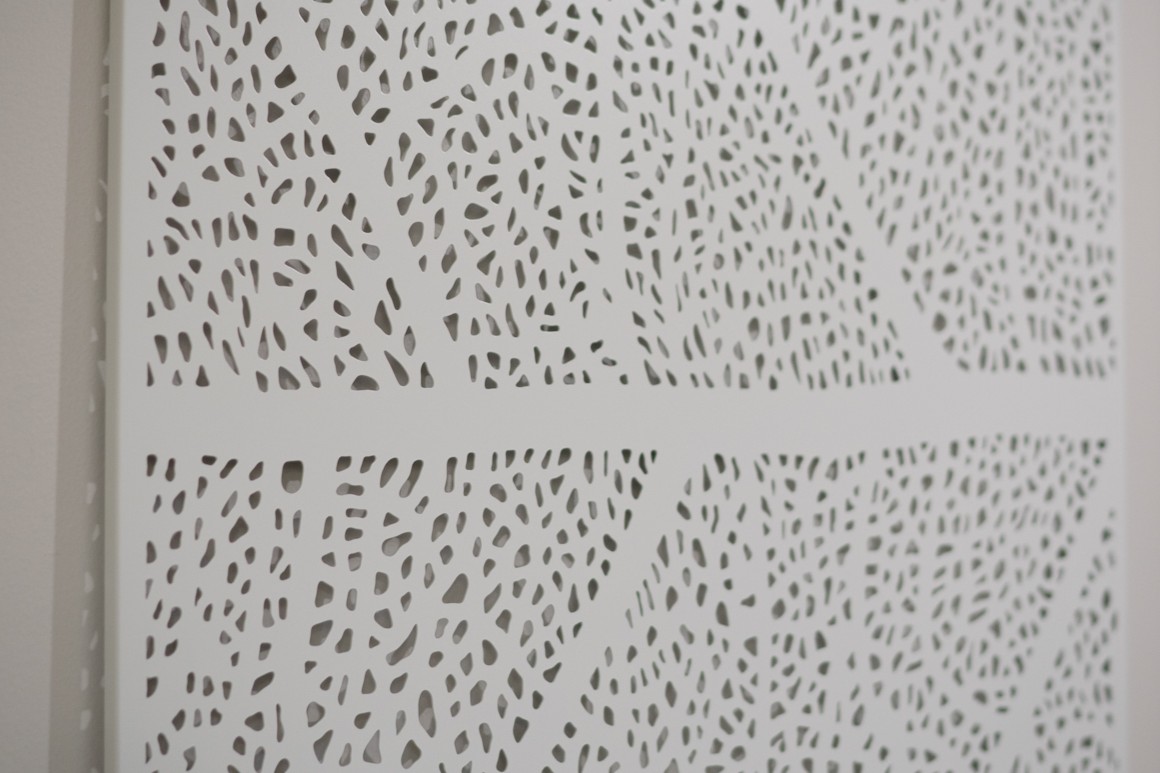
organic
Organic patterns explore amorphous, non-uniform perf fields that feel natural and intentionally irregular.
Rather than relying on grids or repeatable geometry, these patterns emerge from controlled randomness and smooth spatial variation, producing hole shapes and distributions that evolve gently across the surface.
The result is a richly textured field that reads as soft and atmospheric up close, yet cohesive and architectural at scale.
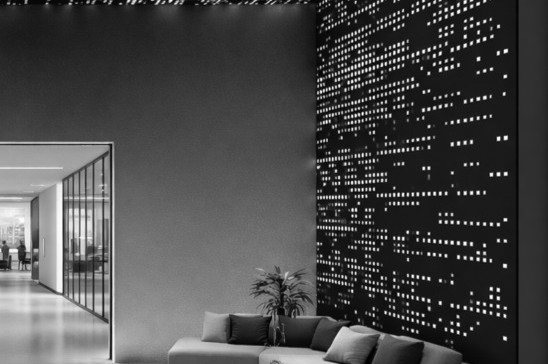
FLOW
Flow is a parametric pattern that expresses movement through controlled linear variation.
Generated along directional paths, the pattern shifts through changes in perforation size, spacing, alignment, and density, creating a sense of motion.
Lines may stretch, compress, bend, or fade across the surface, producing a dynamic visual rhythm while remaining controlled and fabrication-ready.
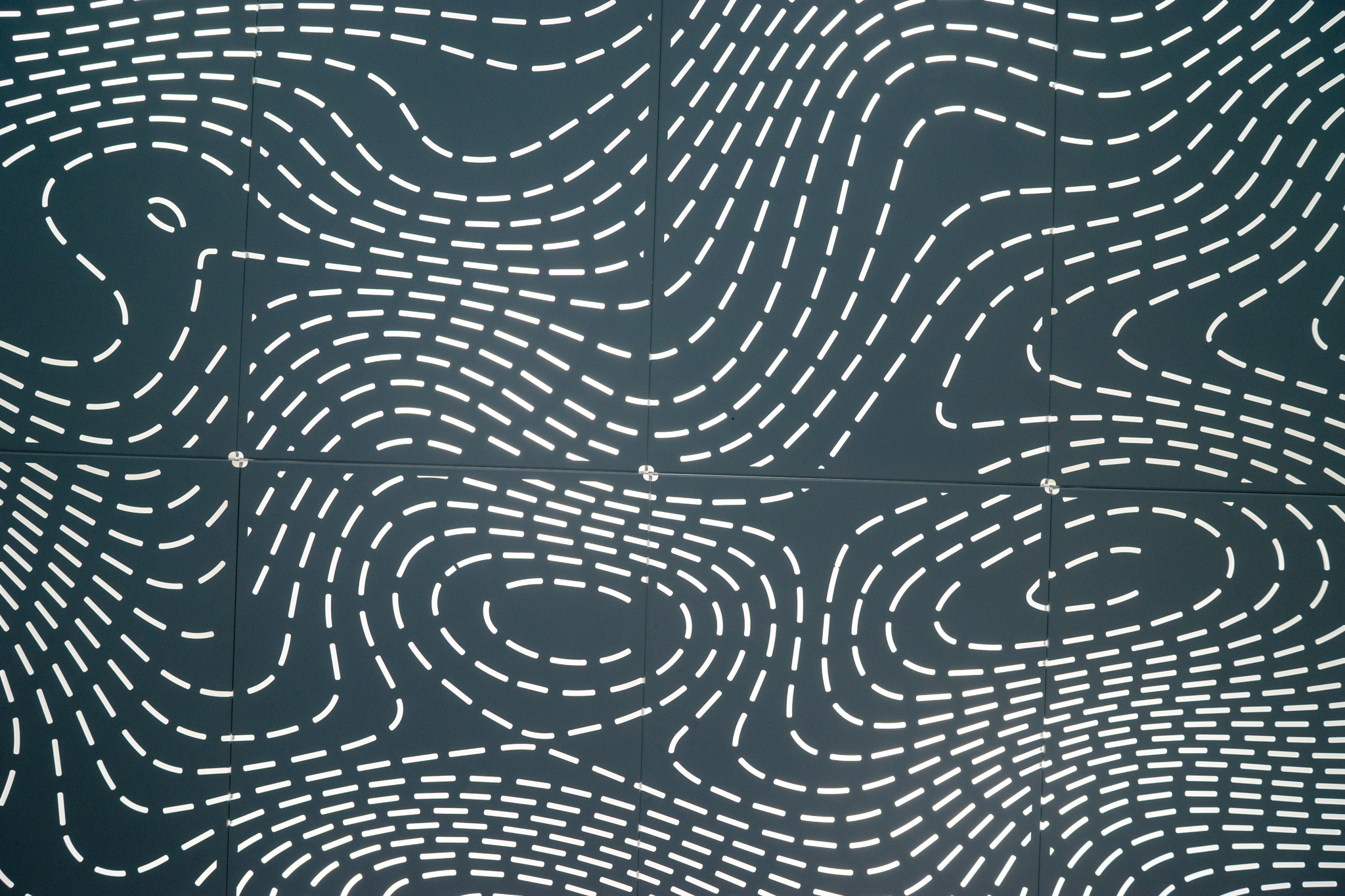
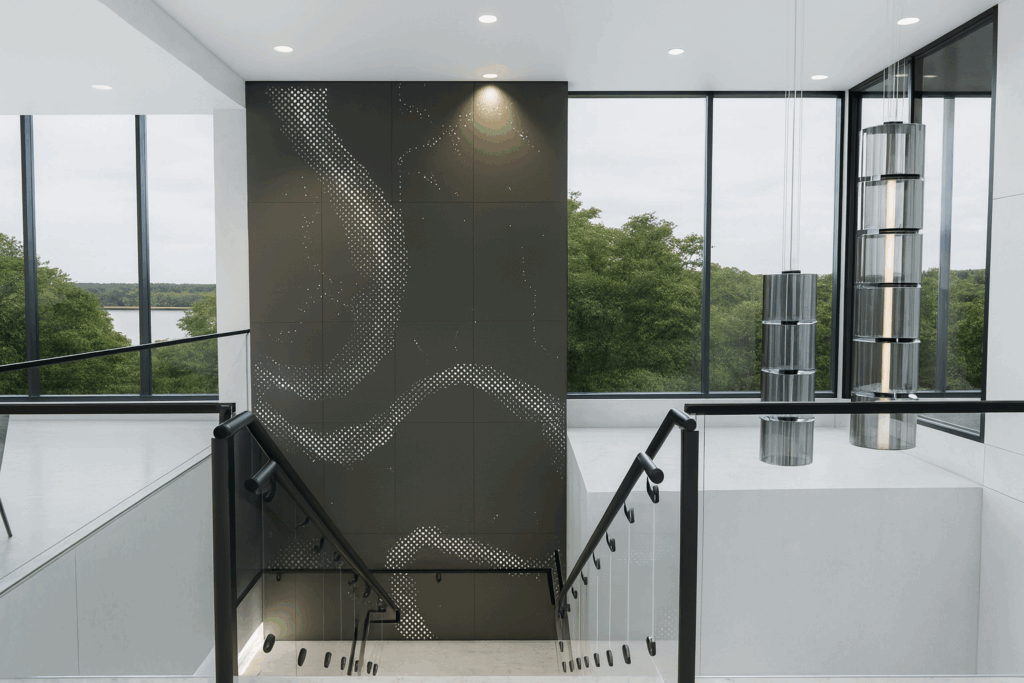
FIELD WAVES
Field Waves are patterns that read as ripples, currents, and fields rather than discrete perforations.
Curved, flowing paths propagate across the surface as a unified field, with line density, spacing, and overlap shifting to produce a sense of depth and motion.
Designers can tune wave scale, frequency, intensity, contrast, and open area to balance visual richness with light transmission, airflow, and acoustic performance.
GALLERY